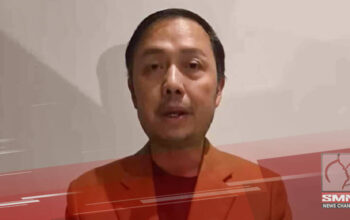

A geopolitical analyst has warned of potentially severe economic consequences for the Philippines if China withdraws from bilateral relations with the country, citing possible disruptions to trade, fuel and fertilizer supplies, tourism, and the livelihoods of Filipinos.
Adolfo Paglinawan said a breakdown in relations could affect hundreds of thousands of overseas Filipino workers (OFWs), as well as businesses, exporters, and farmers dependent on trade with China.
According to Paglinawan, the Philippines could face significant trade losses within a week if China were to sever bilateral ties.
“That means within a week, a total of roughly 920 million dollars in exports and almost 5 billion dollars in imports from China could be lost. What are these? Machinery, electronic components, steel, construction materials, fertilizer, and consumer goods,” Paglinawan said.
Possible restrictions and impact on Filipino workers
Paglinawan’s warning comes amid intensifying exchanges between Defense Secretary Gilberto Teodoro Jr., several senators, and the Chinese Embassy over issues affecting Philippine-China relations.
According to people close to the source, possible measures China could consider include freezing the assets of certain politicians and their families in China, restricting business transactions in mainland, Hong Kong, and Macao, and tightening visa policies for Filipinos traveling to these territories.
People close to the source also indicated, that more Filipinos working illegally in mainland China could face imprisonment.
China could also issue an official travel advisory urging Chinese citizens to avoid traveling to the Philippines. Such an advisory could lead to a major decline in the number of Chinese tourists visiting the country.
Possible grounds for the advisory could include public security concerns, such as kidnapping, as well as political risks that Chinese nationals might face in the Philippines.
Other potential consequences include the removal of the BRP Sierra Madre from Second Thomas Shoal and the suspension of dialogue between the Philippines and Hong Kong concerning Filipino workers.
These measures were raised as possible responses if the Chinese government acts on calls from some senators to declare Chinese Ambassador to the Philippines Jing Quan persona-non-grata.
Paglinawan also warned that the principle of reciprocity could affect Filipino diplomatic personnel and other Filipinos living and working in Chinese territories.
“If he goes home and takes his entire staff with him, under the principle of reciprocity, it would not be just our ambassador in Beijing who could be sent home. All Filipinos in mainland China, Hong Kong, and Macao could also be sent home by the People’s Republic of China,” Paglinawan said.
Possible closure of Philippine consulates in China
Meanwhile, people close to the source added that Beijing could consider closing some Philippine Consulate-General offices in China, including the one in Hong Kong, if the Philippines allows Taiwan to open a new office in Cebu.
It cited the disparity in the number of consulates-general maintained by the two sides as one possible reason for such a move.
However, the potential closure of these consular offices has not been established as an official decision by the Chinese government.
Fuel and fertilizer supplies at risk
Beyond the potential impact on Filipino workers, Paglinawan warned that disruptions in relations could also affect the country’s access to fuel and fertilizer supplies.
He pointed to the Philippines’ dependence on imports and the possible consequences for domestic prices if access to these products were disrupted.
“Second, there would be a shock in the prices of goods. Right now, we are asking China for help by requesting a share of its oil supply. Even the United States is appealing to China to open up access to fuel. We import a lot of our diesel from China,” he said.
Paglinawan also warned that China could impose import restrictions on essential products that the Philippines needs and may have difficulty sourcing elsewhere.
Philippine exporters and farmers could lose a major market
The analyst further cautioned that strained relations could affect Philippine exporters and farmers by limiting their access to one of the country’s major trading partners.
“At the same time, our exports to China, such as bananas, coconut products, copper and nickel ore, and semiconductors, could lose one of their biggest markets. Our exporters and farmers could be left with perishable goods and nowhere to sell them,” Paglinawan said.
Such a disruption could leave businesses searching for alternative markets, while farmers dealing with perishable agricultural products could face difficulties finding buyers.
Paglinawan urges focus on uncontested territories
Amid the tensions, Paglinawan questioned why the Philippine government does not give greater attention to developing the country’s uncontested territories, citing Benham Rise as an example.
He argued that the government should focus on developing these areas rather than escalating tensions over the West Philippine Sea.
“Have you seen the Philippines doing anything there? It has already been awarded to us. The United Nations has approved Benham Rise as ours. So why don’t we focus our attention on that?” Paglinawan said.
The West Philippine Sea, which forms part of the larger South China Sea, is subject to overlapping maritime claims involving several countries, including the Philippines, China, Vietnam, Malaysia, and Brunei.
Marcos opposes declaring Chinese ambassador persona non grata
Malacañang, meanwhile, said President Ferdinand Marcos Jr. does not favor declaring Chinese Ambassador Jing Quan persona non grata.
“We know the president’s view. He would not want this kind of declaration, against any representative of another country here in our country,” Presidential Communications Undersecretary Claire Castro said on October 19, 2026.
The possible economic and diplomatic consequences outlined in the report remain contingent on developments in Philippine-China relations and any measures that the Chinese government may decide to take.