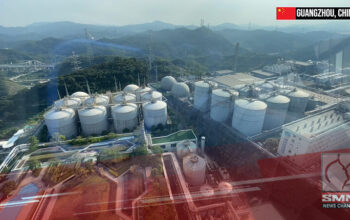

THE Japanese government has begun releasing the treated radioactive ‘nuclear wastewater’ from the crippled Fukushima Nuclear Power Plant into the Pacific Ocean.
Approximately 1.3 million metric tons of “treated wastewater” are expected to be discharged into the sea.
However this action has prompted various reactions from the public and has gained opposition from neighboring countries like China.
However, both the Japanese government and the International Atomic Energy Agency or IAEA have stated that the disposal of treated radioactive wastewater is safe due to its advanced liquid processing system.
DOST says Disposal of Japanese Govt’s Nuclear Waste in Pacific Ocean ‘safe’
Meanwhile, an expert from the Marine Science Institute at the University of the Philippines Diliman has explained the correct procedure for nuclear waste disposal.
“For the nuclear power plant, the majority of it needs to adhere to protocols monitored by the International Atomic Energy Agency. The IAEA has specific checklists that need to be followed for the operation of a nuclear plant and the management of the waste generated by nuclear power plants. The waste generated is also monitored by the nuclear plant itself and representatives from IAEA. So, in general, before a plant releases waste, it must undergo a thorough study by the plant itself and IAEA. Therefore, we can say that it went through a process,” Dr. Irene Rodriguez, Associate Professor, Marine Science Institute, UP Diliman said.
Dr. Irene Rodriguez, Associate Professor at MSI, is convinced that Japan adhered to IAEA guidelines, allowing them to release nuclear waste from the Fukushima nuclear power plant.
“I believe that what the Japanese government is doing is dilutions, where they dilute their accumulated waste and stored waste. Before releasing it into the environment, they divert part of it. For example, they would take one part, one liter of waste, and mix it with a large amount of seawater to reduce the concentration. Then, they study the radioactive materials present in the diluted waste and release only that into the ocean,” ani Rodriguez.
“I think the government or the Japanese government did a very good job containing the problem during the 2011 quake or tsunami that came afterward, and then their storage, what they did after, or to manage the waste.”
Dr. Rodriguez also explained that while the discharge of nuclear wastewater could have a minor effect on biological organisms, it is still manageable.
In terms of aquaculture, fish living near the coastal environment of the Fukushima nuclear power plant could be affected.
“But, fishing can be temporarily suspended in areas with high levels of radioactive material. There are ways to avoid consuming contaminated waste, and we can also monitor fish and shellfish taken from the coastal environment near the nuclear water plant. This way, we can prevent contaminated materials from reaching people,” dagdag ni Rodriguez.
Fishermen should not be worried for now, as said by the experts, because it will take several years before the treated radioactive wastewater from the Fukushima nuclear power plant reaches the Philippine waters.
DFA Stresses Focus on Protection and Preservation of Philippines’ Marine Environment
Meanwhile, the Philippine Department of Foreign Affairs (DFA) acknowledged the technical expertise of the IAEA.
“The Philippines recognizes the International Atomic Energy Agency’s (IAEA) technical expertise on this matter,” according to Department of Foreign Affairs, Republic of the Philippines.
The Philippines evaluates the issue from a science- and fact-based perspective and its impact on the waters in the region.
The Philippines continues to look at this issue from a science- and fact-based perspective and its impact on the waters in the region. – Department of Foreign Affairs, Republic of the Philippines
DFA stresses that protecting and preserving the marine environment remains a priority.
“As a coastal and archipelagic state, the Philippines attaches utmost priority to the protection and preservation of the marine environment,” DFA added.
On the other hand, the Department of Environment and Natural Resources (DENR) assured that they will fulfill their mandate by conducting regular water quality testing.
Department of Science and Technology (DOST) Secretary Renato Solidum Jr. believes in IAEA’s study, asserting that the level of tritium is minimal and therefore safe.
“But, contamination can be reduced to meet requirements through treatment methods. This means that they have lowered it to a safe level, speaking about specific radioactive nuclear waste,” Sec. Renato Solidum Jr., DOST said.
However, many people are still concerned regarding the release of wastewater, as they worry about the potential impact on late-stage fish.
The Pacific Ocean covers the eastern part of the Philippines, potentially reaching the Bicol region and other parts of the country.
Pastor Apollo C. Quiboloy of The Kingdom of Jesus Christ shared his perspective on Japan’s move.
The good Pastor said he strongly opposes Japan’s release of nuclear waste, citing potential health and livelihood effects on people.
“What will be the effect? For me, if I were Japan, I wouldn’t release it.
They can claim that it has an effect or not, but it surely has an effect because it’s radioactive wastewater.”
“If our fish, like tuna and other marine life, are affected, and if we consume them, we’ll also consume the radioactivity and we might get cancer. So, why are they dumping it? Instead, they should store it properly in a large container that can’t be opened, rather than dumping it into the ocean and contaminating the world. Japan shouldn’t do that,” according to Pastor Apollo C. Quiboloy, The Kingdom of Jesus Christ.