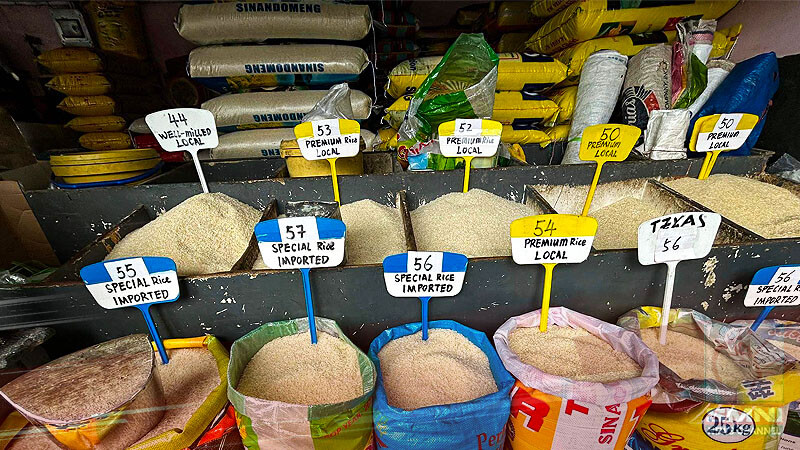
PRESIDENT Ferdinand R. Marcos, Jr. lifted the prices ceiling on rice on Wednesday.
As a result, Executive Order 39, which set the price of regular milled rice at P41 per kilogram and well-milled rice at P45 per kilogram, has been revoked.
According to President Marcos, the price of rice has already decreased in both the domestic and world markets.
The substantial rice harvest this month was also a significant factor in the decision to remove the price ceiling.
National Economic Development Authority (NEDA) expects that rice prices will go down.
“The harvest is quite good. And when the harvest has started, it will peak in October, November,” according to Sec. Arsenio Balisacan, National Economic Development Authority.
According to Sec. Arsenio Balisacan, while there is no certainty whether the decrease in rice prices in the world market will be long-term, a reduction in prices in the country is assured.
“We are watching closely whether it continues to decrease or it will rise again. And we will utilize the available policy tools for us to respond to that, especially if this leads to a reversal and a higher increase in prices,” Balisacan added.
The Department of Agriculture had predicted a continuous increase in rice prices in the first quarter of the year due to El Niño.
According to the latest data from the Philippine Statistics Authority, rice and other cereal products contributed to a 35% increase in the inflation rate.
Despite these challenges, Balisacan mentioned that the dynamics of rice pricing are different now.
“The expectation was that El Niño would make it difficult or would cause rice production globally to fall, right? But that’s not what we are seeing now from the global data on rice. In fact, some positive numbers,” he added.
Although the price cap has been lifted, President Marcos assured that the government would continue to distribute cash assistance.
Following the implementation of the price ceiling, the government provided cash assistance of P15,000 to affected rice retailers.