
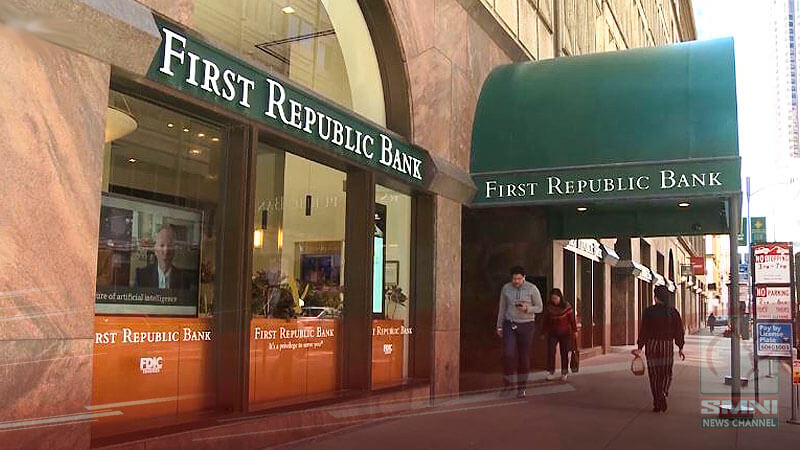
THE First Republic Bank is the largest-ever victim of the 2023 banking crisis.
But since 2001, the said bank is only the second largest bank among the hundreds of banks that have closed across the United States.
In fact, more than 500 bank closures across the U.S. since 2001, and most of them occurred following the 2008 financial crisis.
This was revealed in data published by the Federal Deposit Insurance Corporation (FDIC), an independent agency created by U.S. Congress to maintain stability and public confidence in the U.S. Financial system.
U.S. Regulators seized, then sold the First Republic Bank to JP Morgan Chase on Monday, the second-largest U.S. Bank to collapse.
The First Republic is also the third major bank to shut down nationwide in the past 2 months after the collapse of the Silicon Valley and Signature Banks.
Since 2001, the Washington Mutual Bank has been the largest-ever bank that closed in September of 2008.
And the U.S. had seen 70 bank closures over the past 10 years, the total assets of 3 banks closed in 2023 exceeded the total assets of 25 banks that closed in 2008.
Reports say the scale of U.S. Bank closures this year is the largest.
Meanwhile, a joint study released by economists from U.S. Universities in March reported that the Fed’s rate hike greatly increased the vulnerability of the U.S. Banking system.
The value of financial assets like bonds held by many U.S. Banks has shrunk sharply, as it is affected by the Federal Reserve’s aggressive interest rate hikes.
The asset value of some U.S. Banks even decreased by more than 20%.
The study also warned that if market confidence continues to weaken and more depositors withdraw deposits, then as many as 186 U.S. Banks may become involved and face the risk of closure.
Nearly 200 U.S. banks face the fear of closure
Meanwhile, a research posted in the Social Science Research Network titled “Monetary Tightening and US Bank Fragility in 2023: Mark-to-Market Losses and Uninsured Depositor Runs?” estimated the market value loss of individual banks’ assets during the rate-increasing campaign of the federal reserve’s; assets like mortgage loans and treasury notes can decrease the value when new bonds have higher rates.
This study also examined the proportion of the funding of banks that comes with uninsured depositors with accounts worth more than 250,000 dollars.
The paper suggests that if half of the uninsured depositors withdrew their funds from these 186 banks, they may still face impairments because these banks could not have enough assets to make depositors whole.
And this could potentially force the FDIC to step in, noting that the research does not consider hedging that may protect many U.S. Banks against increasing interest rates.